

How to be vulnerable on the internet
Building an audience in the age of psychological sacrifice.

PART 1: MISUNDERSTANDING
I was once in a car with a very bad man going over the 59th Street Bridge.
The circumstances of me finding my way into that car were so naive that it’s almost impossible to write without sounding like an embarrassing 2010s plot device.
The short story is: I had made a deal with myself to become more open and curious about life, I ended up at a film screening, Bad Director Man asked me if I was an actress (at that time I was) and I thought he was really asking.
Dear Reader, he was not.
He was maneuvering me into the car headed toward Manhattan, and like a bumbling, gullible, silly goose hellbent on being open and curious about life, I got into the car.
As we were driving over the bridge, with the car doors locked, and the East River below us, and a driver whose allegiances were not easily discernible, the Bad Director Man demonstrated his actual intent.
In that moment, I knew we weren’t going to talk about art, film, or acting. And the thought struck me, he’s at least 117 pounds larger than me. He could choose to do whatever he wants as long as I’m in this car.
If I get out of this car, I’ll be okay.
But as long as I’m in this car, I’m completely vulnerable.
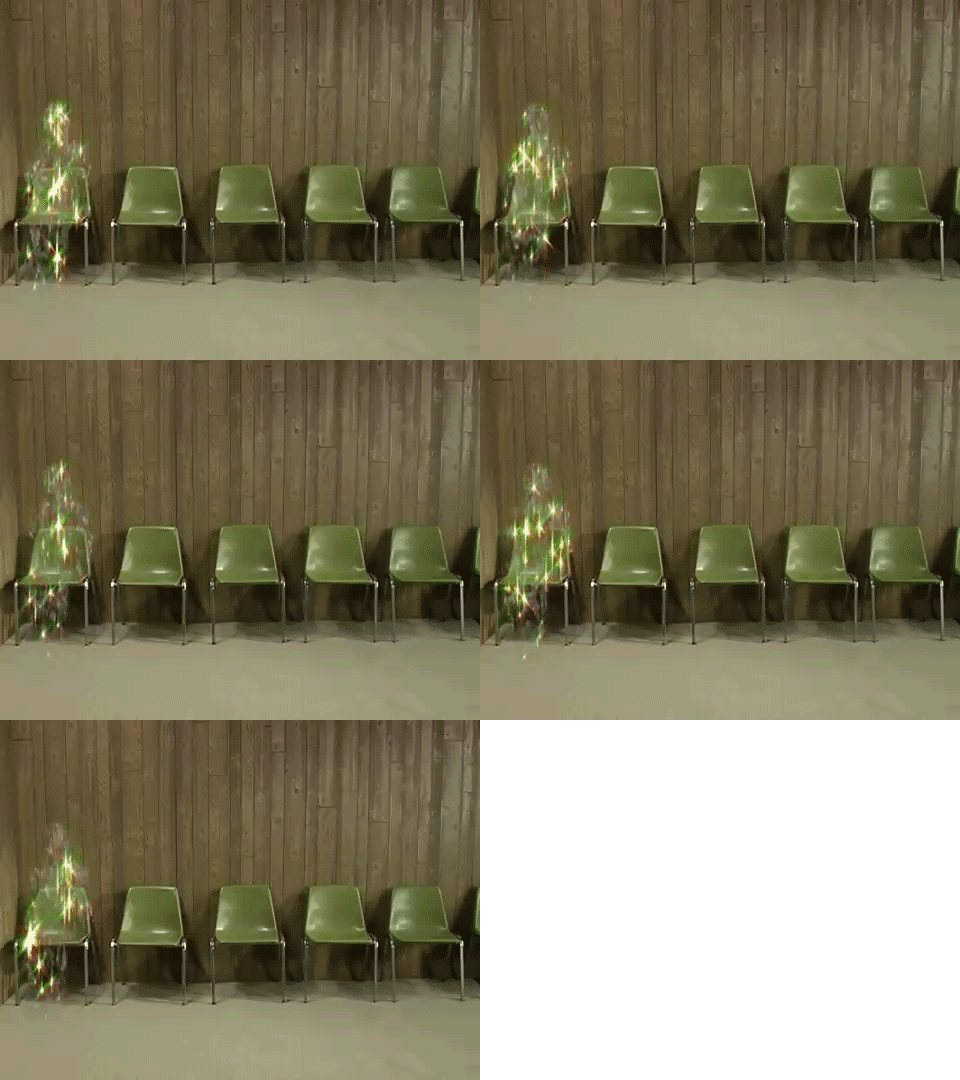
PART 2: GRINNING
I once had a therapist who had previously been a successful actor. She and I shared an industry shorthand as I was navigating a painful career drought.
She had been on Broadway, I was desperate to get there.
Annoyingly, she asked me several times if I actually wanted to get there, like for real.
I understood the need for deeper inquiry, but this, to me, felt grating. Yes, I wanted to get there. And even if somewhere deep down, buried within the secret cave lodged between my ribs and my heart, where I kept my most breakable, most delicate, most brittle self-understandings, even if in there I had an inkling she was right, in this particular 45-minute session, she was wrong. I just wasn’t going to give up that ghost. Not yet.
So she offered a reflection.
She told me that she had been on the other side of the table plenty and auditioned a lot of people in her career. She said if I walked into her audition room, and she was the director, she wouldn’t need to hear me sing or listen to my monologue to know anything else about me.
She said, “I’m a bleeding heart. I know my own desire to help. And Courtney, if you came into the room, in this state, I’d think, I can’t take this person on. She’s too much.”
My reply? “But I smile.”
I revisit this personal fable in my mind when I have to reacquaint myself with the reality of my energetic footprint. Even if I convince myself I’ve hidden myself behind the niceties, I haven’t. The heart bursts forth. It tells on me all the time. Through tears, through jokes, through silence. Through well-practiced smiles.
Even when I try to hide, you can read me like a book.
PART 3: FRONTING
I was 20 years old on the first day of my favorite undergrad class, Classical Acting. I had The Teacher, and I wanted The Teacher to see me and love me. I hung on her every word. Devoured her wisdom like a Levain Double Chocolate Chocolate Chip.
In the first class, she sat us in a circle and asked us several questions. There was one question I still think about:
Do you believe in love at first sight?
We went around the table and shared our answers. In an effort to seem, oh god, what? Smart? Edgy? Mysterious? Deep? I gave what was the most 20 year old answer I could muster:
No. Every time I love someone, I usually hate them first.
What charm! What confidence!
This was not true, it was a lie. The true answer would have been: I don’t know.
What I wish I could tell myself at 20: No matter how hard you try to seem a certain way, you won’t. You are simply yourself in every context, better get used to her.
I wasn’t presenting a cool, mysterious, Serious Actor with a deep “above-it-ness” like I intended. Instead, my sleeves were stitched together with a fragile, scared, desperate-to-be-loved heart on them. A heart needing so much validation while fronting like it needed nothing at all.
When I shared my answer, a look came across The Teacher’s face. It took me a good 15 years before I understood what it meant.
Well, I wanted her to see me. And she did.
PART 4: VULNERABILITY HANGOVERS
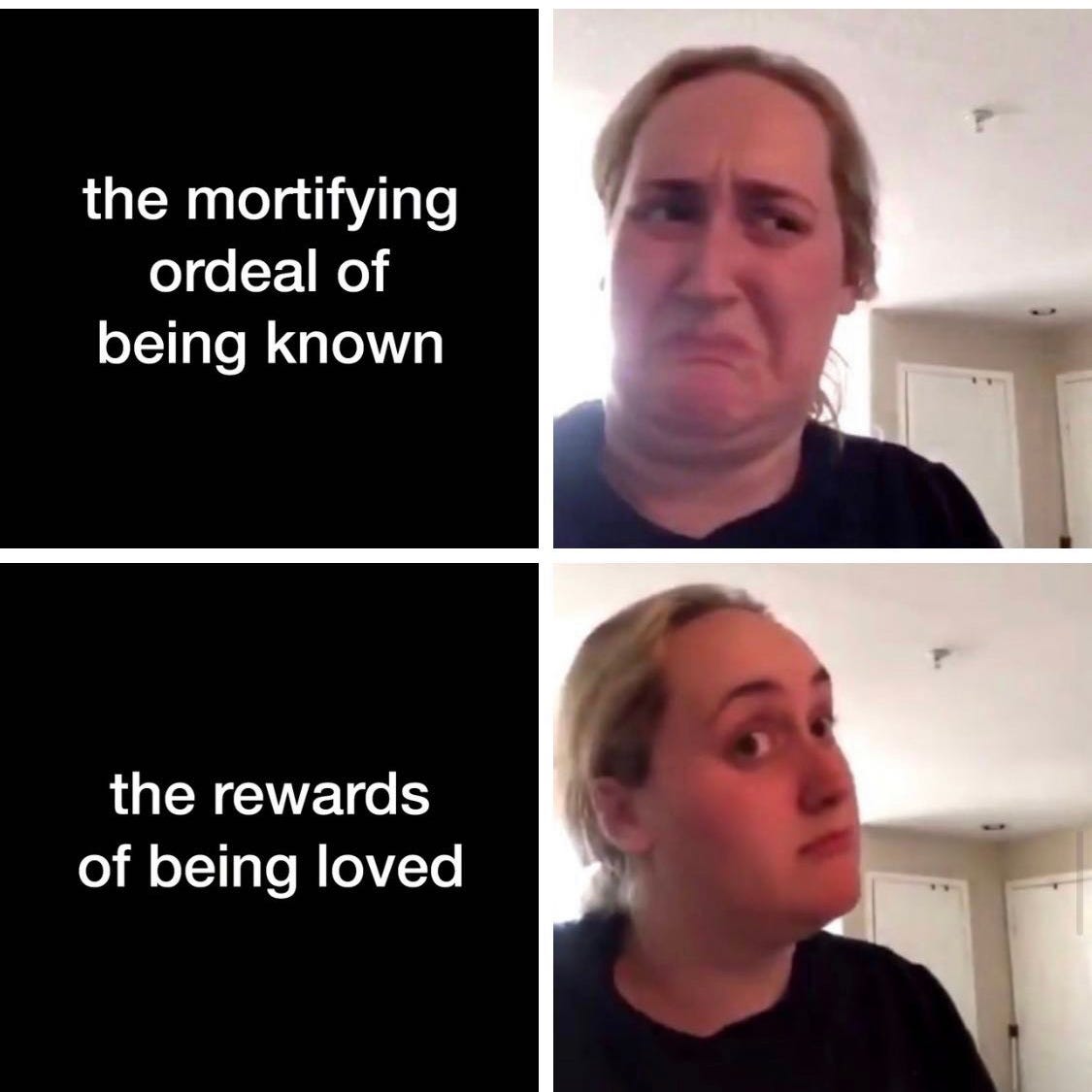
When people mention the word vulnerability, sometimes I think about the car and the Bad Director Man — a vulnerability imposed onto me. And sometimes I think about being the kind of person my former therapist and The Teacher saw. Someone who oozes out of her mask, no matter how big she smiles.
But the idea of vulnerability is more complicated than those examples. Those may have been moment of unchosen vulnerability, but there’s vulnerability I choose all the time.
Choosing vulnerability is a muscular act for me. I don’t quite like it. I’d rather make a joke, or turn the attention somewhere else. I find myself resisting asking for things I need (almost never asking for what I want) because I’m afraid someone might then know what I need (or god forbid, know what I want).
Sometimes admitting what I want feels just a little too revealing.1
Plus, anyway, how does one “be vulnerable” in public? Is this even possible?
Vulnerability is offered up on the internet as psychological sacrificial content. Show us your tears! Show us your mistakes! Show us your failures! Then and only then will you be real!
But I don’t believe vulnerability is all underbelly. In fact, I might say the public performance of vulnerability is the ultimate mask.
The “maybe this will help someone like me”-ness confession of it all spins me out into a deep inside feeling of humiliation. I don’t feel warm when I see people speak like that. I feel detached, like an observer of a moment, not another person present within that moment. And if I’m not another person present within that moment, if my function is just to watch, then can it really be vulnerability?
Doesn’t true vulnerability require both of us to be present?
Otherwise… what’s the risk?
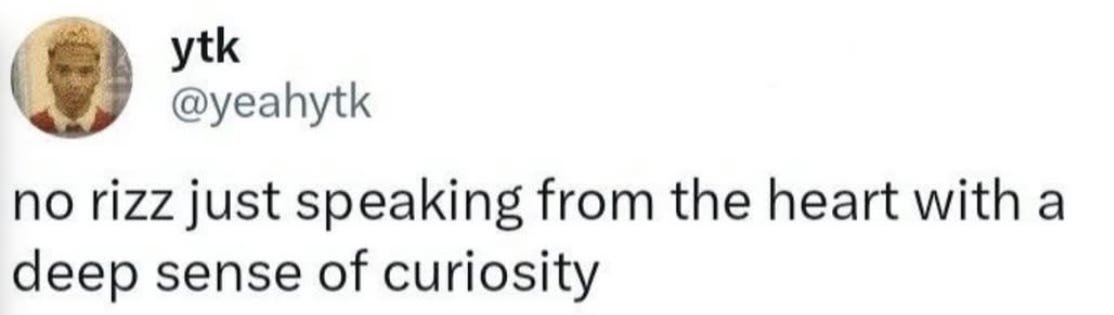
You might be in the camp of folks who believe if you offer vulnerability out to the world, you deserve a return on that. You might be in the camp who believes you’re an idiot for sharing even one tidbit of your inner life for anyone else’s techno-addicted consumption. You may believe that vulnerability is net good, and the outcome doesn’t matter, but the action itself is noble so by the Transitive Property of Equality, the person offering it is noble. You may find it the apex of cringe.
For me, vulnerability is not so much a good or bad thing, but rather an act requiring my constant discernment. I, for one, don’t wish to fling mine about.
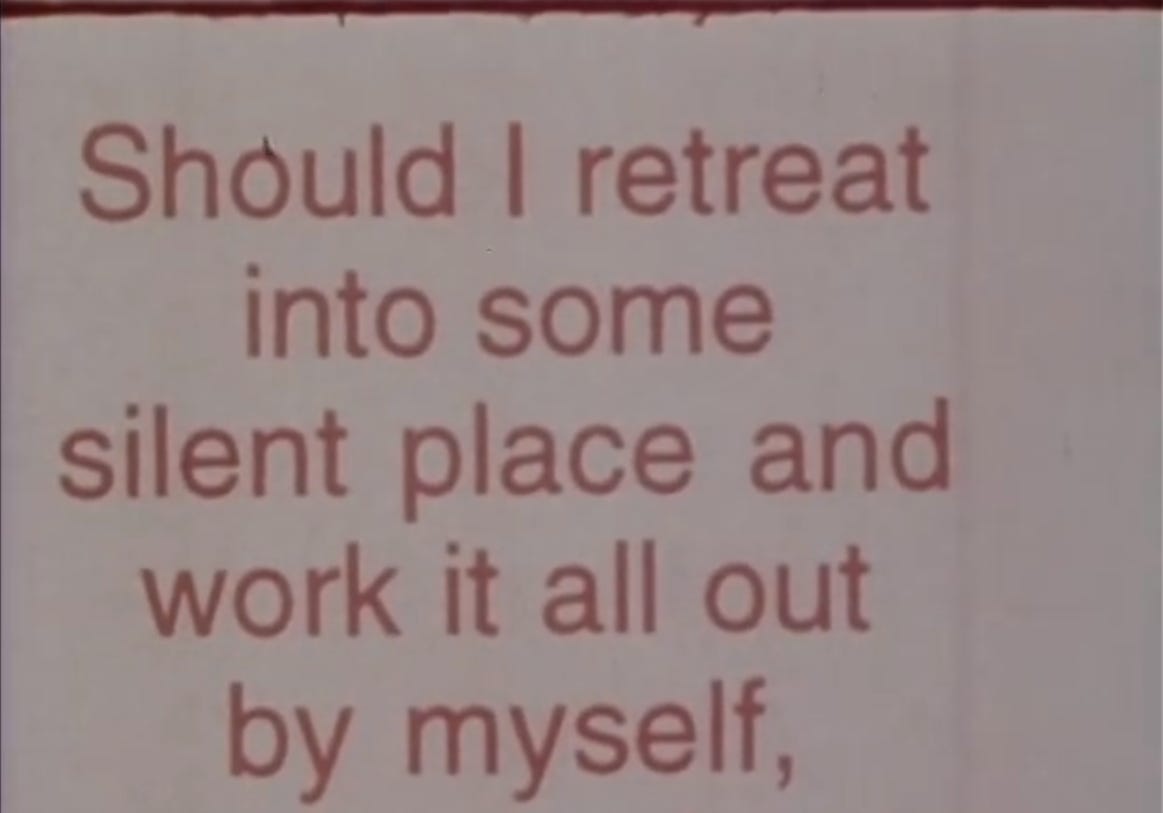
I’ve had people act as if they shared their vulnerabilities with me, but they didn’t actually offer me an ounce of it. They’ve shoved the idea of it in my face, but it was merely a cardboard cutout of true connection. It was thrust upon me with the unspoken expectation that I should be available (and thankful!) for it. Is that really vulnerability? Or is that just being a jerk?
When I put this out to Notes, Lauren Greenwood came through (as she does) with this response:
Victoria Negri shared this list of questions I’ll tattoo to my forehead before posting anything ever again:
And Tom Violett put it as only he can:
You should read all the comments. They’re beautiful and complicated:
PART 5: ON THE INTERNET
As artists, especially as non-dependent filmmakers who are building our audiences and becoming the arbiters of our own internet destinies, vulnerability can feel like a must-pull algorithmic lever.
The big haunting question: How much should we share of ourselves?
I have sometimes witnessed a collective applause sound off for the act of an artist bleeding out for attention.
I have sometimes embarrassed myself back to my first origins as primordial soup because of over-sharing, abandoning any audience-building efforts for years.
I have sometimes witnessed an artist ooze so much well-processed vulnerability that it has become an unambiguous Truth. And the ring of Truth feels like the kindest thing another artist could do for me.
So, Dear Reader, I don’t know.
I suppose for now… to me, perhaps it’s not important if we’re vulnerable (we will be, no doubt), but when.
Can we search under those caves between the ribs and the heart, where we have hidden all our treasures, and do the steady work of processing our reasons for hiding, our reasons for fronting or misunderstanding or grinning-so-big-we-scare-people? Can we be vulnerable with ourselves, first and foremost? Can we tell ourselves the Truth and listen when we hear it?
And if we can alchemize that dark corner into something that lights the path out of ourselves, can we have the resilience to withstand being misunderstood? Can we say what we think and let the chips proverbially fall? Can we, as Lauren Greenwood says, “let our souls flap in the wind”?
Perhaps, for me, somewhere in that process is the worthwhile bit of vulnerability: the continuous process of daring yourself into the truth, whatever it may be.
If we are artists, isn’t that what we do anyway? We go looking for what’s true?
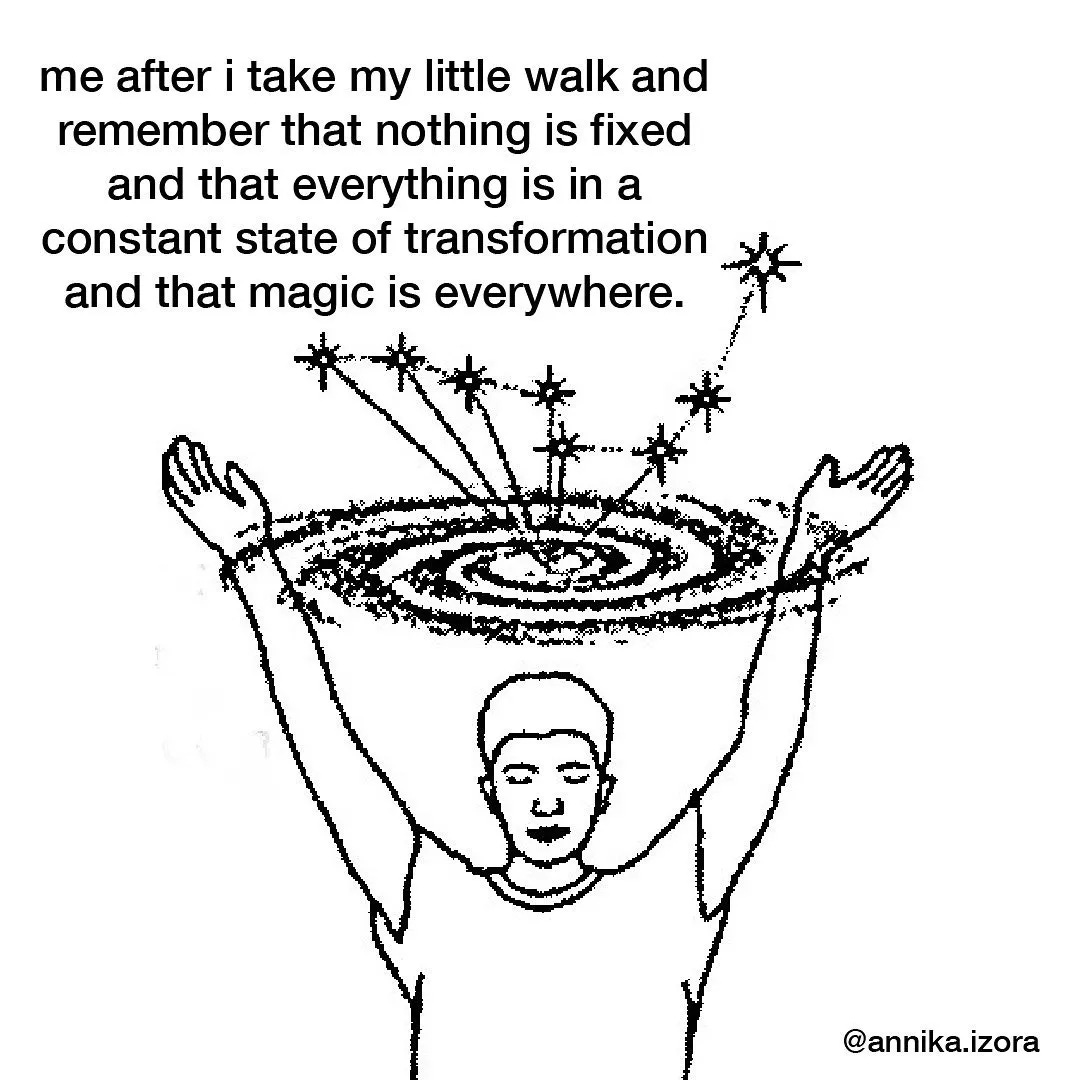
So back to the car with Bad Director Man. There’s more of that story to tell, but I’m choosing not to share it. I’m going to let the car be a metaphor. I felt trapped inside it, but I exited, unscathed, okay.
Vulnerability is both a condition and a choice.
It’s thrust upon us and we can also opt out.
In other words, it’s a moving target.
So then, how to show up on the internet in this age of non-dependence, whether with clickbait tears or real ones, with over-sharing or mysterious aloofness, isn’t the real conundrum to me.
I feel the better question is: how does what we share elicit vulnerability in our audience?
It’s our audience who I believe deserves the attention here, not us. How can our work (be it the art or the content pointing toward the art) knock on the door of the audience’s unopened cave? How can it help them surrender to those vulnerable parts of themselves? How can it create a moment for the audience to inquire deeper within themselves, and in that deep inquiry, discover we’ve left a gift for them in the cave?
Vulnerability isn’t necessarily a virtue.
Vulnerability isn’t currency to pay for the attention we want.
It’s a dark forest of trees hiding the light and asking us to find it within ourselves.
And the continuous discernment of our own relationship to it, as we predictably, cyclically enter those dark nights of the soul on and off the internet, is perhaps where the most interesting and inviting work can be made.
We don’t need to be vulnerable for everyone else’s amusement.
Perhaps instead, we might simply strive to be true.
This is fully human-generated writing. No AI was used in any part of it.
Feeling NonDē curious? Quick Ways to Get Started in the NonDē Film Movement ahead »
Subscribe to FilmStack Daily Digest and start getting your analysis and breakdown from thinkers on this platform with independent voices.
Try non-dependence one of these 64 ways.
Read about the New Film Criticism and subscribe to a swath of amazing film critics who don’t just introduce us to new work, but also help us think and write about films in an altogether fresh, original, personal way. Check out Film Soup Zine run by KLA Media Group and C. C. Simmons who will be reviewing specifically-NonDē films.
Join the NonDē 50 Films Project by signing up here and checking out the dashboard here.
Start talking about it. Let’s bring these ideas into the conversation. At first people will say we can’t do it. That’s fine, let’s talk about it. Let’s bring these big ideas into the rooms with us.
Discuss with your team. Be the leader on your production team and bring non-FilmStack filmmakers into the fold. Share resources and posts with them about how to do things differently.
Share about the NonDē Film Movement far and wide. A better world is inevitable if we make it so.
Read the entire NonDē series:
Went to Slamdance, and all I got was renewed faith in the future of film
The (not so) hidden agenda of non-dependent film (part 1 of 3)
The love of the game is a power move (part 2 of 3)
Who gets to speak about the future of film? (part 3 of 3)
Admittedly, an issue one must promptly get tf over when trying to make a film.
You are such a gifted writer, Courtney. I have been thinking about this topic a lot lately because I think culturally somewhere along the way there has been a shift where some of us are unwittingly believing we can do living and relationships so perfectly we can avoid vulnerability. Also: it’s summer of Toni Morrison for me and she is a master at writing in ways that are equal parts wise and vulnerable. Just finished rereading “Sula” and it has me thinking so deeply about this.
So beautiful…I love how so many of your posts have this amazing conversational quality, half imparting deep wisdom, half asking us questions…they remind me of those times sitting around a table with a good friend and a pack of p-funks and some drinks contemplating life…those were always my favorite times. 🥰